
3D Printing Tips: Your Cheat Sheet from First Print to Masterpiece
Introduction
You hit “print” with that mix of hope and dread. Will this be the one? Or will it become another spaghettified mess, a warped pancake, or a model that snaps in your hands? Whether you’re unboxing your first cheap 3D printer or pushing the limits of a professional SLA 3D printer, the gap between a digital 3D design and a perfect physical object is filled with tiny pitfalls. The right knowledge turns frustration into flow. This guide isn’t just a list of 3D printing tips—it’s your roadmap, split into two crucial lanes: one for beginners to build a rock-solid foundation, and one for professionals to refine their craft and reliability. Let’s get you printing with confidence, no matter your starting point.
Building Your Foundation: Why Basics Beat Hacks Every Time
Before we split the lanes, let’s agree on one universal truth: in 3D printing technology, there are no shortcuts, only smart fundamentals. A flawless print on a low price 3D printer is always more impressive than a failed one on the best 3D printer. It all comes down to understanding your machine and the process. These core principles are your bedrock, whether you’re in a Chennai workshop or a 3D printing Bangalore startup.
3D Printing Tips for Absolute Beginners: Start Strong
Welcome! Your goal here isn’t perfection; it’s consistent, successful prints. Master these, and you’ve already beaten 90% of the frustration.
Tip 1: The Sacred Ritual of Bed Leveling (and Adhesion)
This is the #1 cause of failed prints. Your first layer must be perfect.
The Tip: Use the “paper method” carefully. You should feel a slight drag on a sheet of paper between the nozzle and bed at all four corners and the center. Then, CLEAN your build plate with isopropyl alcohol. Oily fingerprints are the enemy.
Why it Works: A level bed ensures that crucial first layer sticks evenly, preventing warping and failed prints from the start.
Tip 2: Befriend Your Slicer: It’s Not Just a Button
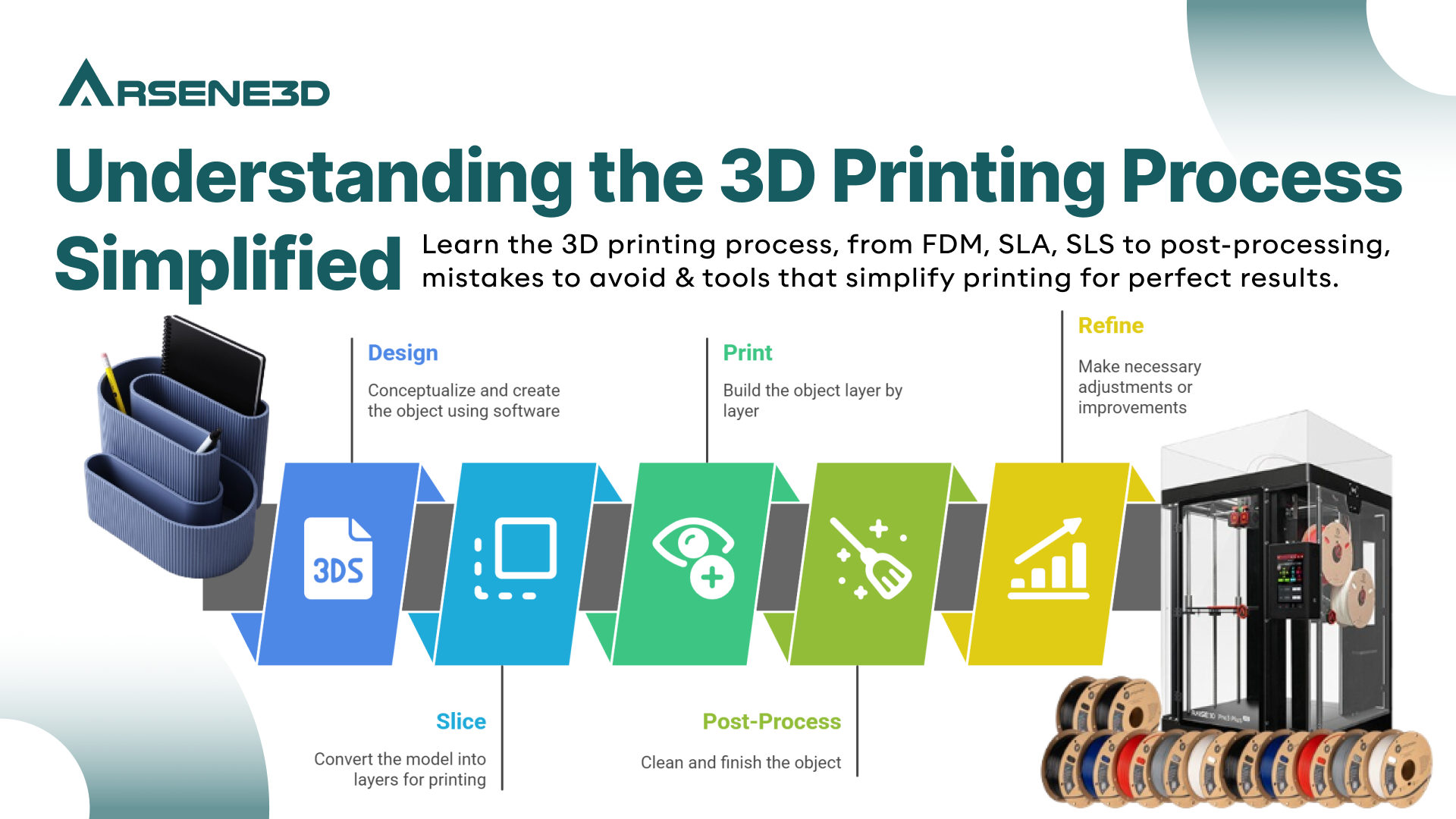
Your 3D printing software (the “slicer”) is where the magic is configured. It turns your 3D sketch into printer instructions.
The Tip: Don’t just use default profiles. For beginners, start with these conservative settings: Print Speed: 50mm/s, Layer Height: 0.2mm, Infill: 20%, and a Brim for adhesion on small parts.
Why it Works: Slower speeds and thicker layers are more forgiving and reliable, giving you early wins.
Tip 3: Material Matters: Start with PLA
Not all 3D printer filament is created equal.
The Tip: For your first 10 prints, use only good-quality PLA. It’s easy to print, doesn’t require a heated bed (though it helps), and is low-odor. Avoid ABS or fancy materials until you’ve got your sea legs.
Why it Works: PLA is the most forgiving material, letting you learn the machine without fighting the filament.
Tip 4: Your First 3D Designs Should Be Simple
You want to print a full Iron Man suit. Start with a calibration cube.
The Tip: Begin with known test models: a calibration cube, a Benchy boat, or a simple vase. These are designed to test specific aspects of your printer’s calibration.
Why it Works: These prints are quick, use little filament, and give you clear diagnostic information about accuracy, stringing, and cooling.
3D Printing Tips for Professionals & Enthusiasts: Elevate Your Game
You’re past Benchy. You’re printing functional prototypes, client deliverables, or complex art. Your 3D printing tips need to focus on repeatability, material mastery, and design optimization.
Tip 1: Calibration is a Continuous Process, Not a One-Time Task
Professional results demand professional calibration.
The Tip: Regularly calibrate your E-Steps (extruder flow) and perform a PID auto-tune for your hotend and bed. Invest in calibration prints like a temperature tower and a retraction test for each new filament roll.
Why it Works: This ensures dimensional accuracy and consistent extrusion, which is critical for parts that need to fit together or bear load.
Tip 2: Master Your Material’s Ecosystem
Move beyond generic PLA. Understand the 3D printer filament or resin you’re using.
The Tip: For PETG, dry it thoroughly before printing (use a filament dryer). For ABS/ASA, an enclosure is non-negotiable for temperature stability and to prevent warping. For engineering resins, follow the manufacturer’s post-curing instructions exactly.
Why it Works: Each material has a sweet spot for temperature, speed, and cooling. Mastering these unlocks strength, appearance, and reliability you can’t get from default settings.
Tip 3: Design for Additive Manufacturing (DfAM)
This is the ultimate pro tip. Don’t just design a part; design it for your 3D printing machine.
The Tip: Incorporate chamfers (45-degree angles) instead of sharp 90-degree overhangs. Orient your model to minimize support material on critical surfaces. Use generous fillets to reduce stress concentration. Design tolerances for press-fits (typically 0.2mm clearance is a good start).
Why it Works: DfAM results in stronger, more printable, and better-looking parts with less waste and post-processing time.
Tip 4: Implement Process Control and Documentation
Turn art into a repeatable science.
The Tip: Keep a simple log. Note the filament brand/type, specific slicer profile name, print temperature, and any observations for every print. Take pictures of your first layer. This logbook is gold when you need to replicate a perfect print or diagnose a sudden issue.
Why it Works: It removes guesswork, ensures quality control, and saves immense time when troubleshooting or onboarding a team member.
The Solution: How These 3D Printing Tips Translate to Real-World Results
Whether you’re a beginner or a pro, these tips converge on one goal: reducing the 3D printer cost of failure—both in wasted material and, more importantly, wasted time. For a business, time is money. A warped 24-hour print isn’t just a ₹500 loss in filament; it’s a day of delayed progress. For a hobbyist, it’s the discouragement that makes a machine gather dust.
These 3D printing tips systematize success. They turn the 3D printing technology from a black box into a predictable tool. And when your in-house capability hits its limit—whether it’s the size of your FDM 3D printing bed, the need for SLA printing detail, or a material you don’t have—that’s where the most strategic tip of all comes into play.
The Ultimate Professional Tip: Know When to Use a 3D Printing Service
The most advanced 3D printing tip is understanding that owning a printer isn’t always the answer. Partnering with a professional 3D printing service near me is a force multiplier.
For Beginners: Before you invest in a 3D printer price for a project, test your 3D design with a service. Get a professional-quality part to verify fit and function. It de-risks your entire project.
For Professionals: Offload overflow work, access industrial 3D printing technology like SLS for end-use parts, or get large-format prints without a ₹5 lakh capital investment. It’s scalable, flexible capacity.
The Workflow: It’s the modern print online model. Instead of going to the nearest printing shop, you use online printing services. Upload your file to a portal like Arsene 3D’s, choose your material and technology, and get an instant quote. 3D print online with expert oversight.
Value Add: Resources to Cement Your Knowledge
Deep Dive into Troubleshooting: For a visual guide on fixing common issues, our article on [Top 10 3D Print Failures and How to Fix Them] (INTERNAL LINK) is a must-read, complementing the tips here.
Software-Specific Mastery: Each slicer (Cura, PrusaSlicer, Bambu Studio) has hidden gems. We have tutorial videos on our YouTube channel, @arsene3d, breaking down advanced settings that can transform your print quality.
Community Wisdom: Join forums like the r/3Dprinting subreddit or manufacturer-specific groups. Seeing others’ problems and solutions is an invaluable learning tool.
A Relatable Story: From Hobbyist Piles to Professional Files
Aisha, a product designer, started with a low price 3D printer. Her desk was a graveyard of failed prints—stringy, warped, brittle. She was ready to give up, thinking the 3D printer cost was a total loss.
She decided to follow a structured approach. She Googled 3D printing tips for beginners and started from zero: meticulous bed leveling, slicing with basic PLA profiles, printing only calibration models. Within a week, she had a perfect calibration cube. The graveyard stopped growing.
Fast forward a year. Aisha is now a pro, printing complex assembly jigs for her design firm. Her pro tip? A detailed print log and DfAM. She recently designed a custom housing with living hinges. Instead of printing it in-house on her FDM printer and risking a 12-hour failure, she used our online printing services to have it made in durable SLS Nylon. The part was flawless and went straight to client presentation. She used the right 3D printing tips at each stage of her journey and knew when to leverage a service for the best result.
Conclusion: Your Journey, Powered by the Right Tips
3D printing tips are the bridge between potential and reality. For the beginner, they are the guardrails that keep you on the road. For the professional, they are the high-performance tuning that gets you to the destination faster and more efficiently.
Remember, the goal is creation, not calibration. Use these tips to minimize the hurdles and maximize your making. And when a project demands capabilities beyond your bench, remember that the global print shop is just a click away.
Ready to Apply These Tips with Expert Support?
If you’re in Chennai and want hands-on guidance, need flawless results via FDM 3D Printing in Chennai or SLA Printing in Chennai, or require expert 3D Designing to implement DfAM principles from the start, our team is here to help.
Level up your prints: Call/WhatsApp +91 96295 95638 or email sales@arsene3d.com.
Let’s build better, together:
Instagram | LinkedIn | YouTube | WhatsApp